Mechanical polishing is one of the most widely used finishing methods for stainless steel tubes and pipes. It enhances surface smoothness, improves appearance, and strengthens corrosion resistance without altering the chemical composition of the steel. Mechanical polished stainless steel tubing is commonly used in food processing, pharmaceutical equipment, architectural projects, marine environments, and high-purity industrial systems.
This guide explains how mechanical polishing works, surface finish standards, benefits, applications, and how it compares with other finishing methods.
Mechanical polished stainless steel tube is stainless steel tubing finished by physically smoothing the surface using abrasives such as belts, brushes, and polishing compounds. The process removes surface imperfections, reduces roughness, improves corrosion resistance, and produces finishes ranging from satin to mirror polish.
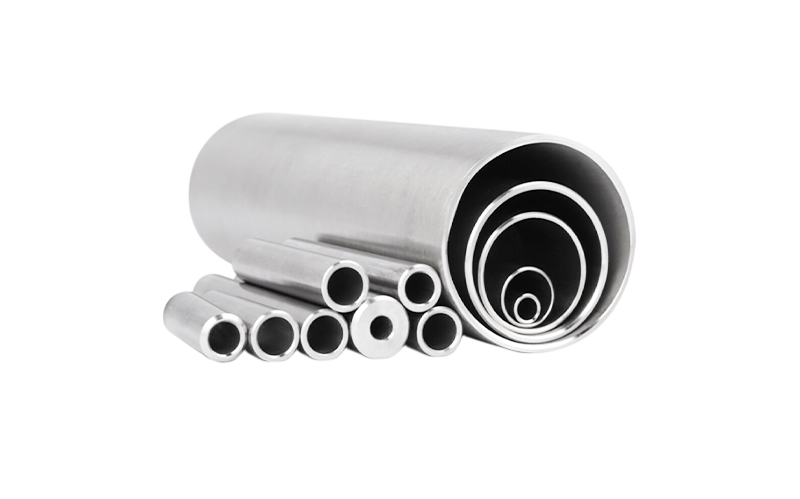
Mechanical polishing is a surface finishing process that removes microscopic peaks, scratches, and mill scale from stainless steel pipes using abrasive tools. The process typically involves multiple stages, moving from coarse grinding to fine polishing.
The result is a smooth, uniform surface suitable for hygienic, decorative, or industrial environments.
| Feature | Standard Finish | Mechanical Polished |
|---|---|---|
| Surface roughness | Higher | Lower |
| Appearance | Dull | Smooth / shiny |
| Corrosion resistance | Good | Improved |
| Cleanability | Moderate | Excellent |
| Applications | General use | Hygienic / decorative / precision |
Mechanical polishing makes stainless steel pipes easier to clean and more resistant to contamination.
Mechanical polishing is classified by grit level and surface roughness (Ra).
| Finish | Grit Range | Appearance | Typical Use |
|---|---|---|---|
| #180 | Coarse polish | Matte | Industrial equipment |
| #240 | Medium polish | Smooth satin | Structural & general use |
| #320 | Fine polish | Soft sheen | Food & beverage |
| #400 | Bright polish | Reflective | Pharmaceutical |
| #600+ | Mirror polish | Highly reflective | Decorative & high purity |
The smoother the finish, the lower the surface roughness and the easier the tubing is to clean.
Polished 304 stainless steel is the most widely used grade for mechanically polished tubing because it balances performance and cost.
Key advantages include:
Because of these properties, polished 304 stainless steel tubing is commonly found in food processing plants, breweries, kitchens, and architectural projects.
Mechanical polishing improves corrosion resistance by reducing surface irregularities where moisture, chemicals, or contaminants can accumulate.
A smoother surface means fewer places for corrosion to start.
Used in:
Smooth surfaces support easy cleaning and sanitation.
Used for:
Polished stainless steel tubing reduces contamination risk.
Used in:
Mirror and satin finishes create modern aesthetics.
Used in:
Improved corrosion resistance helps withstand salt exposure.
Used in:
Smooth surfaces improve durability and longevity.
| Feature | Mechanical Polishing | Electropolishing |
|---|---|---|
| Process type | Physical abrasion | Electrochemical |
| Surface smoothness | Very smooth | Ultra-smooth |
| Cost | Lower | Higher |
| Appearance | Satin to mirror | Bright & sterile |
| Typical use | Industrial & decorative | High purity & pharma |
Mechanical polishing is often chosen when a high-quality finish is required at a more economical cost.
Consider these factors:
For most commercial and industrial applications, a #320–#400 mechanical polish provides an excellent balance of performance and cost.
To maintain the appearance and corrosion resistance of polished stainless steel tubing:
Proper maintenance helps preserve the polished surface for many years.
Typical roughness ranges from Ra 0.8 μm to Ra 0.2 μm depending on the polish grade.
Yes. Most food and beverage systems use mechanically polished stainless steel tubing, especially #320 or #400 finishes.
No. Mechanical polishing only changes the surface finish and does not alter the structural properties of stainless steel.
Yes. It performs well outdoors, though 316 stainless steel is preferred for harsh marine environments.
With proper maintenance, stainless steel pipes can last decades without significant corrosion or degradation.
Mechanical polished stainless steel tubes provide an ideal combination of appearance, hygiene, durability, and cost efficiency. Whether used in food processing, architecture, marine environments, or industrial systems, polished stainless steel tubing offers improved corrosion resistance, easy cleaning, and long-term reliability.
For most applications, polished 304 stainless steel tubing remains the most practical and widely used choice.