Electropolished (EP) stainless steel tube is a type of stainless steel tubing that undergoes an electrochemical finishing process to improve the internal surface, cleanliness, and long-term corrosion resistance. The process removes a controlled layer of metal from both the inner and outer surfaces, producing a smooth, passive, and contamination-resistant finish suitable for ultra high purity environments.
This guide explains how EP tubing is produced, its advantages, common applications, and how to choose the right specification.
Electropolished stainless steel tubing is stainless steel tube treated with an electrochemical polishing process that dissolves a thin surface layer to create a smooth, clean, and corrosion-resistant internal surface. It is widely used in ultra high purity systems such as semiconductor, pharmaceutical, and high-purity gas applications.
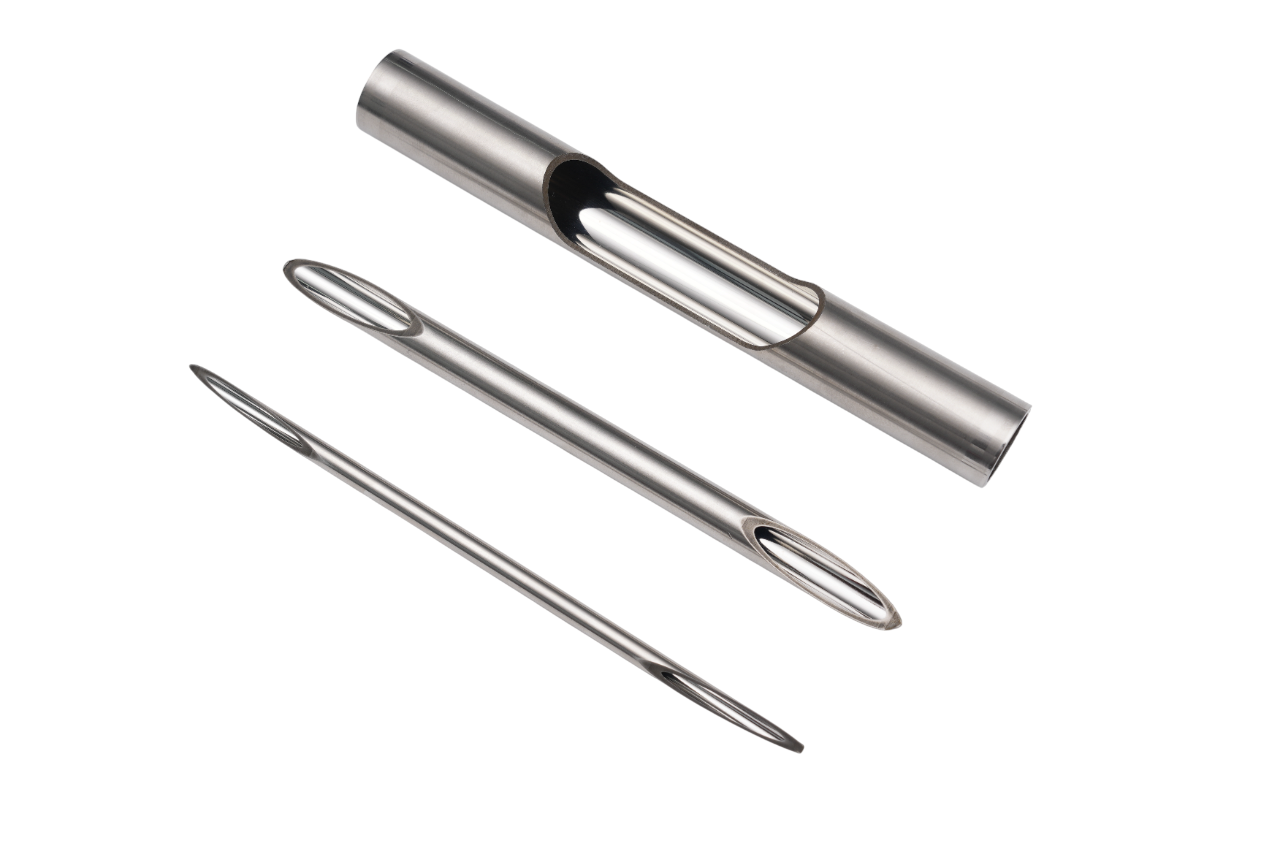
Electropolishing is an electrochemical surface finishing method. During the process:
Unlike mechanical polishing, electropolishing works at a microscopic level, improving surface chemistry and cleanliness without affecting the tube’s dimensional accuracy.
The internal surface of stainless steel tubing directly affects fluid purity, particle generation, and system reliability.
Electropolishing improves the internal surface by:
These improvements make EP tubing suitable for processes where contamination control is mandatory.
Electropolishing increases the chromium concentration at the surface, forming a stronger passive layer that protects against oxidation, chemical exposure, and moisture.
The process removes surface irregularities, lowering Ra values and reducing areas where particles or bacteria could accumulate.
EP tubing is widely used in systems requiring minimal contamination, including high-purity gas and clean fluid transport.
A smoother surface reduces friction and turbulence, helping maintain stable and predictable flow conditions.
The polished surface reduces residue buildup and supports effective cleaning and sterilization procedures.
Electropolished tubing is usually supplied with controlled roughness values:
| Surface Finish | Typical Ra Value |
|---|---|
| Standard EP | ≤ 0.5 μm |
| High Purity EP | ≤ 0.38 μm |
| Ultra High Purity EP | ≤ 0.25 μm |
Lower roughness levels are commonly required in semiconductor and pharmaceutical industries.
Electropolished stainless steel tubing is typically produced from:
316L is preferred for ultra high purity environments due to improved corrosion resistance and low carbon content.
Used for high-purity gas delivery systems transporting nitrogen, hydrogen, and specialty gases.
Applied in purified water, WFI systems, and sterile process lines.
Suitable for hygienic fluid transport and clean-in-place (CIP) systems.
Used in laboratories and industrial gas distribution where contamination must be minimized.
Provides stable performance for precision measurement and calibration equipment.
| Finish Type | Surface Quality | Typical Use |
|---|---|---|
| Annealed & Pickled (AP) | Basic clean surface | General industrial piping |
| Bright Annealed (BA) | Smooth bright finish | Clean fluid systems |
| Mechanical Polished | Improved exterior finish | Decorative & architectural |
| Electropolished (EP) | Ultra smooth & clean | Ultra high purity applications |
EP tubing provides the highest level of cleanliness and surface refinement.
When selecting EP tubing, consider:
1. Surface Roughness Requirement
Higher purity systems require lower Ra values.
2. Material Grade
316L is recommended for aggressive or high-purity environments.
3. Tube Size and Wall Thickness
Choose based on flow rate, pressure, and system design.
4. Certification and Testing
Look for documentation such as:
It is used in ultra high purity industries such as semiconductor manufacturing, pharmaceuticals, biotechnology, and high-purity gas systems.
The electropolishing process produces a smoother internal surface and stronger passive layer, improving cleanliness and corrosion resistance.
No. Both internal and external surfaces are electropolished, although internal surface quality is often the primary requirement.
Bright annealed tubing is heat treated for a clean surface, while electropolished tubing undergoes an electrochemical process that further reduces roughness and contamination.
No. The process removes only a microscopic layer of material and maintains dimensional accuracy.
Electropolished stainless steel tubing offers a combination of smooth internal surface quality, strong corrosion resistance, and excellent cleanliness. These characteristics make it suitable for ultra high purity applications where reliability and contamination control are priorities. Understanding the electropolishing process and selection criteria helps ensure the tubing meets the performance requirements of demanding industries.