Bright Annealed (BA) stainless steel tube is a precision tubing product manufactured through a controlled heat treatment process in a protective atmosphere to produce a smooth, clean, and highly reflective surface finish. Compared with conventional annealed and pickled tubes, bright annealed stainless steel tube provides superior cleanliness, improved corrosion resistance, and excellent dimensional consistency, making it suitable for high-purity and high-precision industries.
This guide explains what BA tubing is, how it is produced, its benefits, typical applications, and how to choose the right tube for your project.
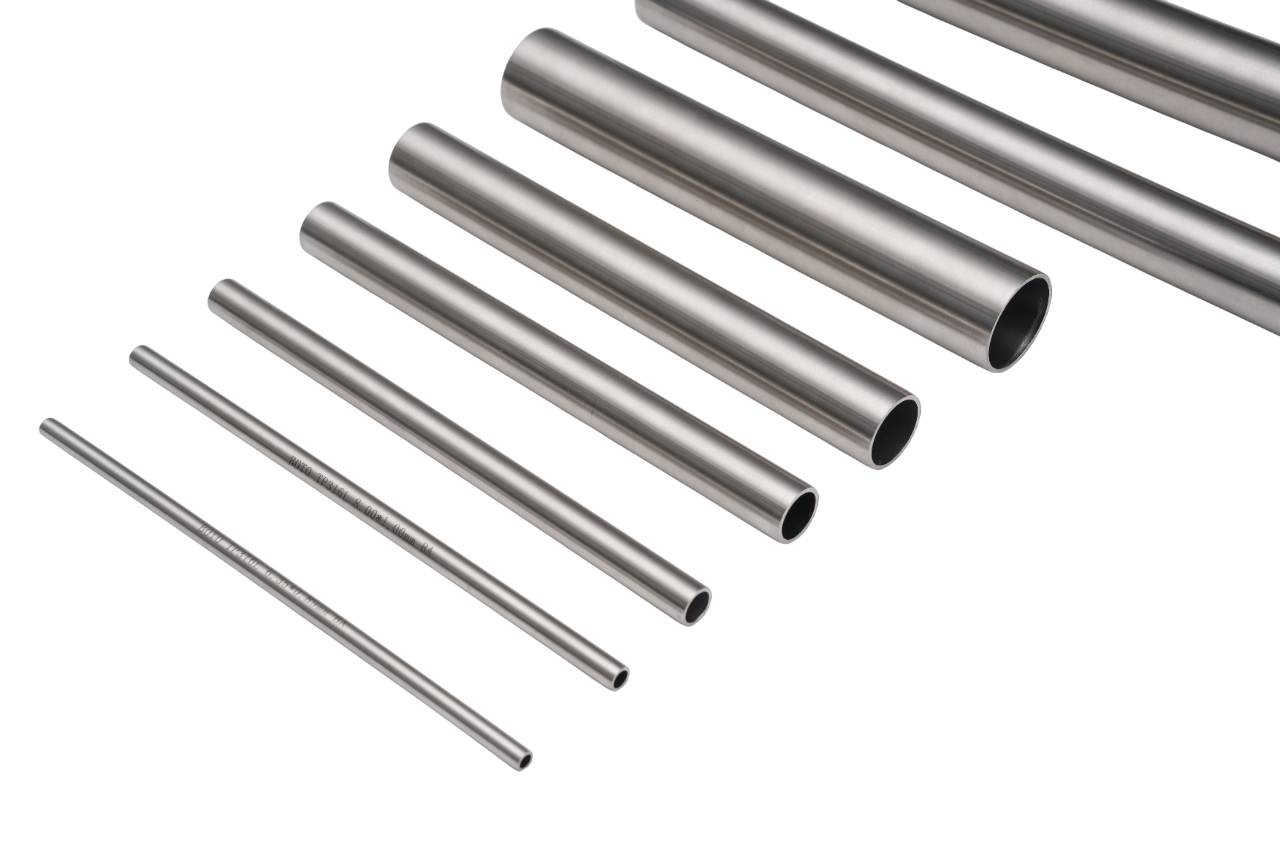
A bright annealed stainless steel tube is a stainless steel tube that undergoes annealing in a vacuum or inert gas furnace. During this heat treatment process, oxygen exposure is minimized, preventing oxidation and scale formation.
The result is a tube with:
Because no acid pickling is required, the tube retains a bright and contamination-free surface, which is especially valuable in industries where cleanliness and purity are required.
The manufacturing of BA tubing begins with cold drawing or cold rolling of stainless steel tubes, followed by a controlled heat treatment process in a sealed furnace.
This process produces a mirror-like surface finish without pickling or scale removal.
| Feature | Bright Annealed Tube | Annealed & Pickled Tube |
|---|---|---|
| Surface finish | Smooth and shiny | Matte and dull |
| Oxide scale | None | Removed by acid pickling |
| Cleanliness | Very high | Moderate |
| Corrosion resistance | Higher | Standard |
| Typical applications | High purity & precision | General industrial |
The smooth internal surface of BA tubes reduces particle adhesion and improves fluid flow efficiency.
The oxygen-free annealing environment prevents oxidation and preserves the chromium oxide passive layer. This enhances long-term corrosion resistance, especially in humid or chemically aggressive environments.
The bright surface finish reduces contamination risk and simplifies cleaning, making BA tubing suitable for hygienic and high-purity systems.
The heat treatment process refines the grain structure and improves ductility, toughness, and uniformity.
Smooth internal walls reduce friction and turbulence in gas or liquid transport.
The reflective surface makes BA tubing suitable for visible installations and architectural applications.
Typical stainless steel grades include:
Material selection depends on the operating environment and media.
Used in high-purity gas and chemical delivery systems where particle generation must be minimized.
Suitable for clean piping systems, purified water, and process gases.
Smooth surface finish helps maintain hygiene and simplifies cleaning.
Provides stable performance in small-diameter and high-precision tubing.
Used for sanitary tubing and precision components.
Applied in fuel lines, hydraulic systems, and precision tubing.
Selecting the correct BA tubing depends on several technical factors.
Choose based on corrosion resistance requirements and operating environment.
High-purity industries often specify internal surface roughness limits.
Consider outer diameter, wall thickness, and precision requirements.
Ensure the tube meets mechanical and safety requirements.
Check compliance with ASTM, EN, or other applicable standards.
Reliable suppliers perform strict inspection and testing, including:
These tests ensure consistent quality and long service life.
It refers to a heat treatment process performed in a controlled atmosphere that prevents oxidation and produces a shiny surface finish.
BA tubing offers higher cleanliness and better corrosion resistance, while pickled tubing is suitable for general industrial use.
Surface finish affects cleanliness, corrosion resistance, and flow performance, especially in high-purity systems.
Semiconductor, pharmaceutical, food processing, instrumentation, and high-precision industries.
The oxygen-free environment preserves the protective oxide layer on stainless steel, improving long-term durability.
Bright annealed stainless steel tube combines a controlled heat treatment process, smooth surface finish, and excellent corrosion resistance. These features make it a preferred solution for industries that demand cleanliness, reliability, and precision. Understanding material grade, surface requirements, and application conditions helps ensure the right tubing choice for long-term performance.