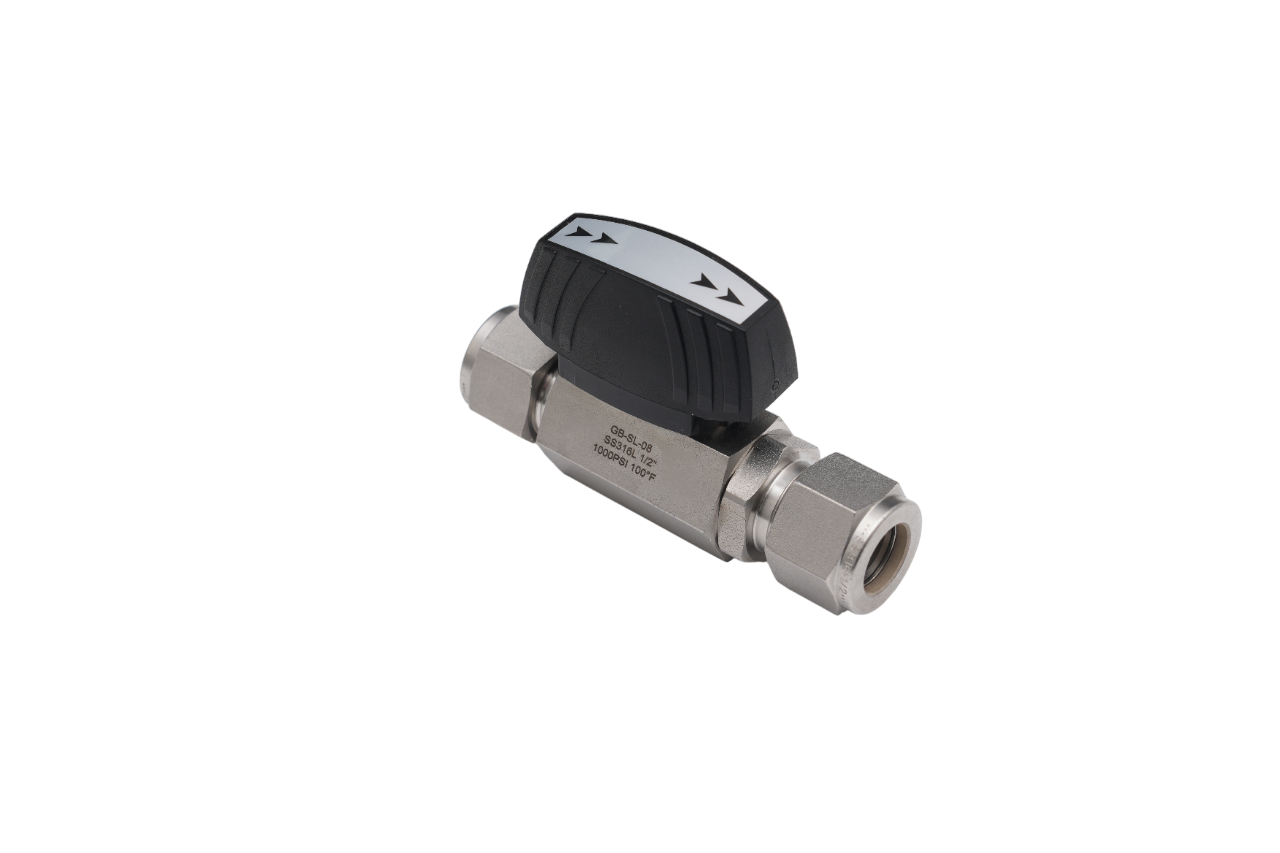
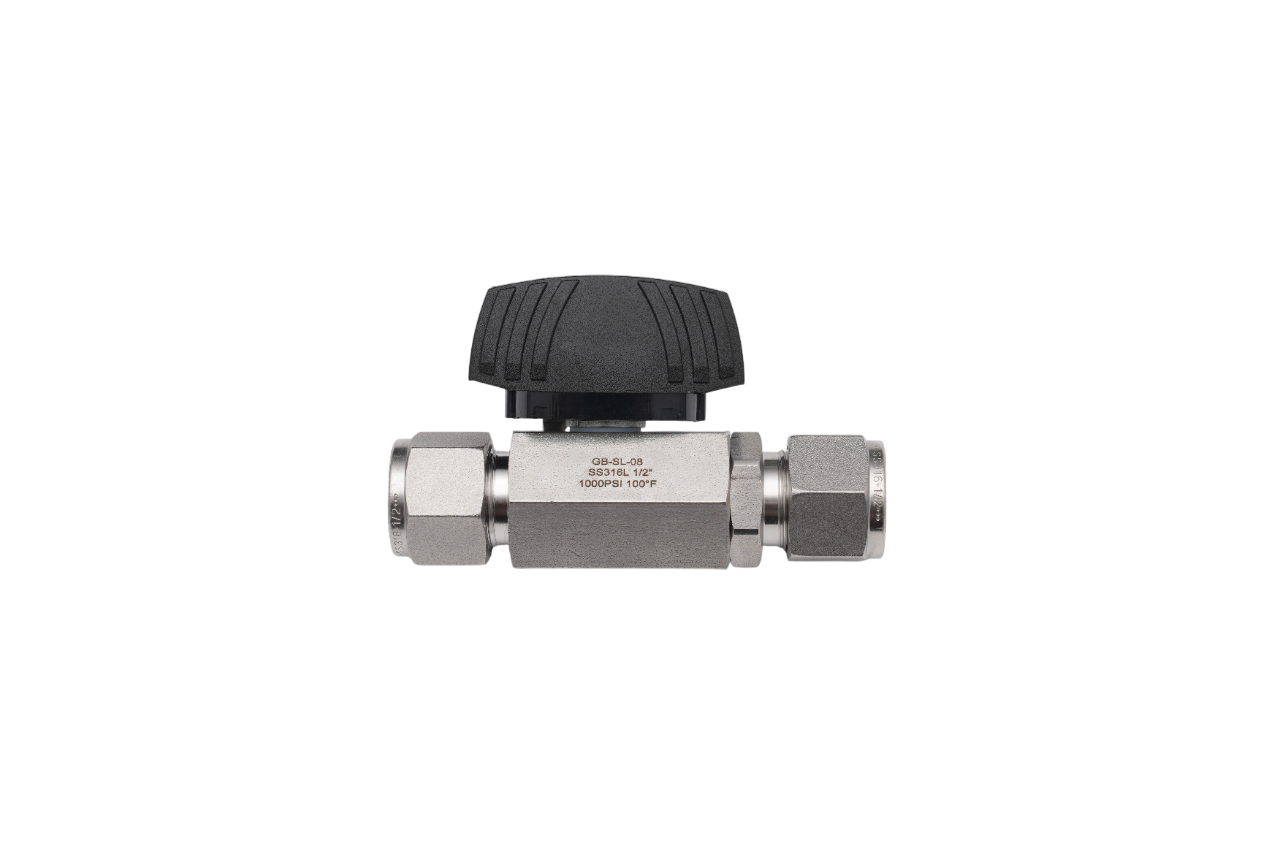
How Does A Compression Ball Valve Work?
A compression ball valve works by combining two functions:
A rotating ball inside the valve controls flow (open/close by 90° rotation)
Compression fittings secure the tube by tightening a nut that compresses a ferrule around the pipe
When the handle is turned, the ball aligns or blocks the flow path, allowing or stopping fluid movement.
What Is The Advantage Of A Compression Ball Valve?
The main advantages include:
No welding or threading required
Easy installation and removal
Reliable sealing with ferrule compression
Suitable for tight installation spaces
Good vibration resistance
Ideal for instrumentation and control systems
This makes it widely used in compact industrial piping systems.
What Is A Tube Compression Ball Valve?
A tube compression ball valve is a valve designed specifically for tube systems (instead of pipe systems). It uses compression fittings to grip the tube securely, often using a double ferrule system for high-pressure sealing performance.
Which Materials Are Used In Compression Ball Valves?
Common materials include:
Stainless Steel 304 / 304L
Stainless Steel 316 / 316L
Brass (for light-duty systems)
316L stainless steel is widely used in chemical, pharmaceutical, and high-purity systems due to its corrosion resistance and durability.
Where Are Compression Ball Valves Used?
Compression ball valves are widely used in:
Instrumentation systems
Chemical dosing systems
Water treatment plants
Food and beverage processing
Pharmaceutical production
Gas distribution systems
Laboratory equipment
They are especially common in small-diameter stainless steel tubing systems.
Can Compression Ball Valves Be Reused?
Yes.In many designs, the valve body can be reused. However, ferrules may deform during installation, so replacement of sealing components may be required for reassembly.